Note Recognition Game
One note plays. You find it by ear. That's pitch recognition in its simplest form, and the most direct way to start ear training. Real instrument sounds, free in your browser, no signup.
Start training now, freeNo account needed. Works on phone and desktop.
How it works
- Pick any of 20+ instruments (piano, guitar, strings, winds, or brass) and a difficulty.
- Each round plays one note from your range.
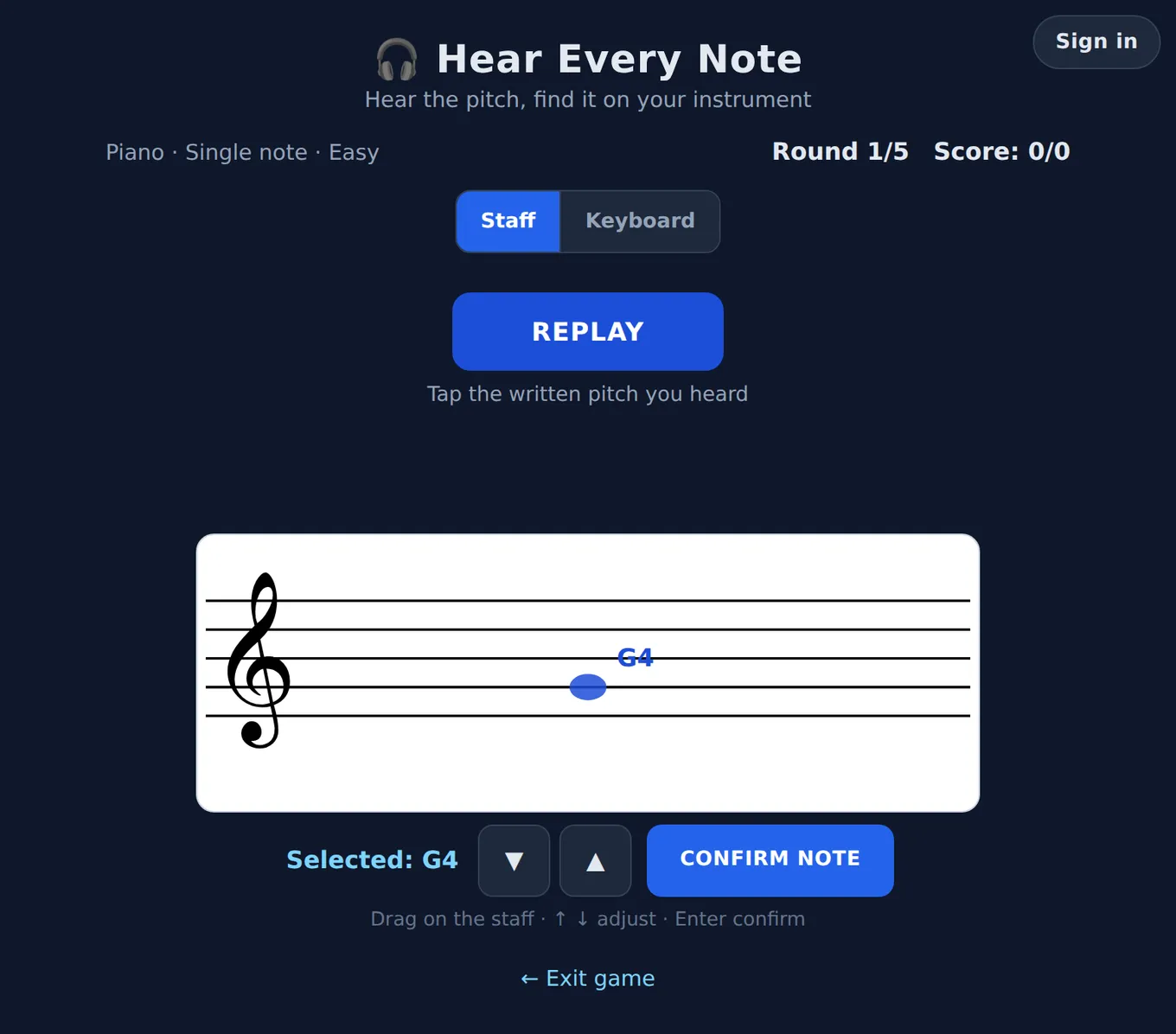
- Find it on a music staff or piano keyboard (saxophonists can answer on a fingering chart). And replay the note as often as you like.
- Five rounds per game, with instant feedback after every answer. A perfect game is 5/5.
The right first exercise
Interval and chord exercises quietly assume you can already hold one pitch in your head and locate it. That's the whole job here: hear a note, keep it in memory, find it. On Easy difficulty there are only eight candidates (a major scale), so you get wins right away. From there, Medium opens a chromatic octave, Hard uses your instrument's whole range, and Custom lets you drill one register at a time.
Notation practice, included
You answer on a staff in written pitch, so every round quietly doubles as note-reading practice on your own clef, whether that's treble, bass, alto, or grand staff. If you play a transposing instrument (clarinet, trumpet, saxes, horn…), you see the note exactly where it would sit on your sheet music while hearing it at concert pitch. Same translation your brain already does in rehearsal.
Tips for training pitch memory
- Sing the note back before answering. Matching it with your voice cements the pitch far better than silent guessing.
- Stick with one instrument sound for a while. A consistent timbre gives your pitch memory a stable anchor.
- Use Custom range to focus on the register where you actually spend your playing time, then widen it as you improve.
- Play daily. Pitch memory fades fast without reinforcement, and the built-in streak rewards showing up.
- When single notes start feeling easy, graduate to intervals and then chords.
Pitch memory, not perfect pitch
Let's be honest about what this trains: pitch memory, holding a tone in your head and finding it. That's different from perfect pitch, the rare inborn ability to name notes from silence. But here's the thing: pitch memory plus fast interval recognition gives you almost everything perfect pitch would, and both are trainable at any age. We wrote up the full comparison, including what the research says about adults learning absolute pitch, in perfect pitch vs relative pitch. Wondering where single-note practice fits in a bigger routine? The beginner's guide to ear training covers the whole progression, and the daily challenge will drag you back tomorrow for your streak.
Frequently asked questions
Is this the right exercise for a beginner?
Yes. Single-note recognition is the easiest place to start ear training: one pitch at a time, a limited range on Easy difficulty, and instant feedback every round.
Will this give me perfect pitch?
No tool can honestly promise you adult perfect pitch, and we won't. What consistent practice does build is strong pitch memory and reliable relative pitch: recognizing notes quickly from context and a remembered reference. That's how most working musicians get by, perfect pitch or not.
Do I answer on my own instrument?
You hear your instrument's real sound and answer on a music staff (or piano keys for piano). Saxophonists can answer on a fingering chart. Transposing instruments read written pitch, exactly as they would on sheet music.
Is it free?
Yes. Every mode, instrument, and difficulty is free, and you don't need an account to play.
Related reading: ear training for singers · a 10-minute daily routine · the beginner's guide