Relative Pitch Training
Relative pitch training is practice at hearing the distance between notes, so that one reference note lets you find every other. It is the skill behind playing by ear, transcribing and singing in tune, and unlike perfect pitch it is learnable at any age. Here is the four-step method, how long each step takes, and a free exercise for each one.
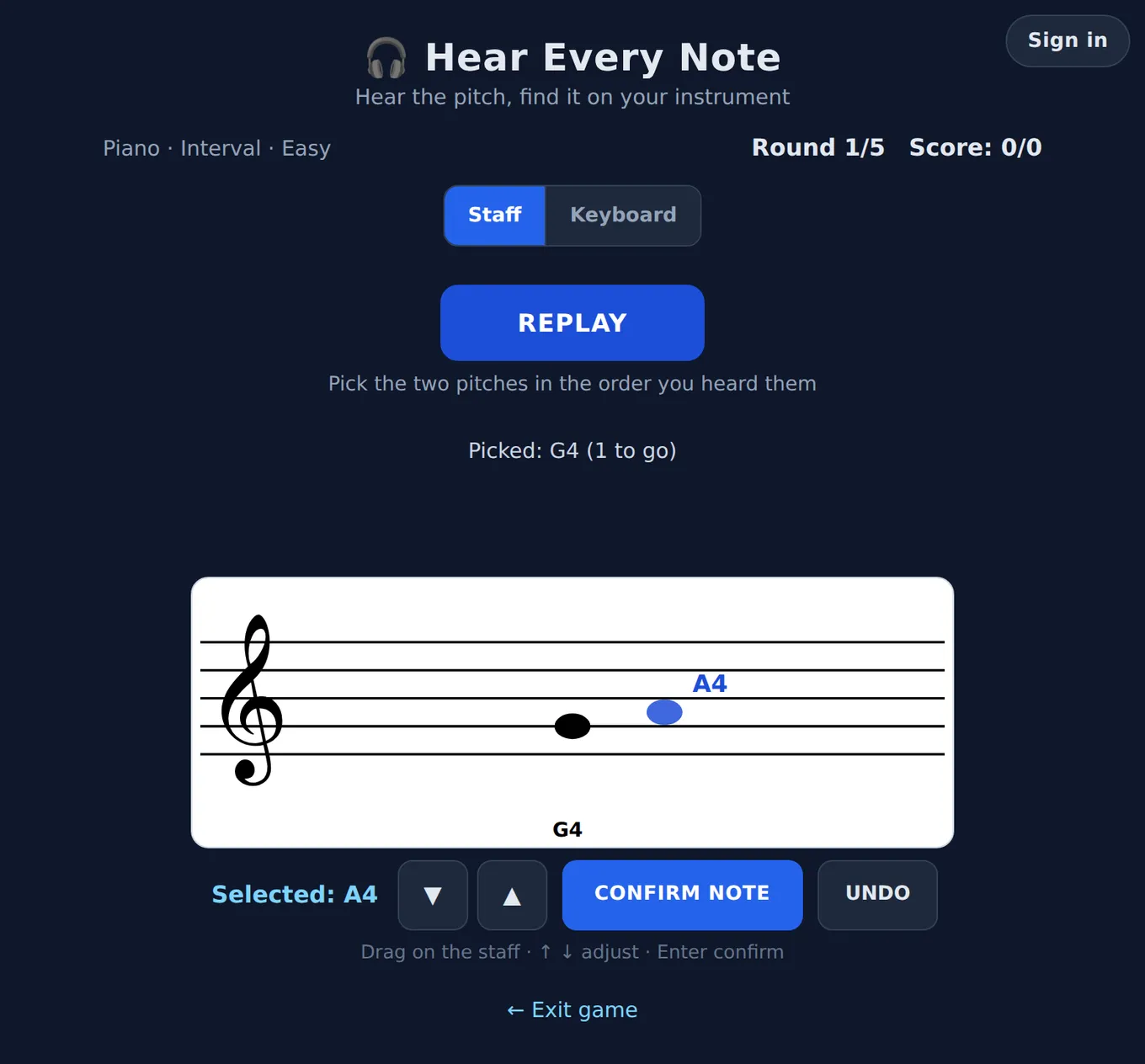
Hear two notes nowOpens Interval mode on piano, Easy. Press PLAY and two notes sound; find both on the keys or the staff. Free, no account.
What relative pitch training builds
Hand a musician with good relative pitch one note and they can name everything that follows: the melody moved up a minor 3rd, the chord is the IV of the key, the bass just went to the 5th. None of that needs the absolute name of any note. It needs the distances, and distances are what the ear learns fastest, because every melody and chord you already know is made of them. If you want the science on why this is the trainable skill and perfect pitch mostly is not, read perfect pitch vs relative pitch. This page is the training.
The four steps
- Pitch memory first. Hear one note, hold it in your head, find it on a staff or keyboard. This is note recognition, and it comes first because every relative judgement is measured against a note you are holding in memory. A week on Easy, then Medium.
- Then intervals. If the names are new to you, start in Interval names mode on Easy, which asks only five, and use anchor songs for any one that has no sound in your ear yet. Then place the same distances as pitches in Interval mode: two notes play and you find both, in order, ascending and descending.
- Then chords. A triad or seventh chord plays and you find every note inside it in the chord trainer. Chords are stacked intervals, so this is step two heard vertically, plus inversions, which is hearing which interval is on the bottom. How to recognize chords by ear gives the listening order.
- Keep it short and daily. Ten minutes a day beats a weekend marathon, because the ear consolidates between sessions. The daily challenge is there to make the habit automatic, and the 10-minute routine lays out the first two months week by week.
Keep the key in your ear
The step most relative-pitch methods skip is hearing a note's place in a key, not just its distance from the last note. The jazz progression trainer is built for this: a piano-and-bass duo plays a short progression in a random key, the key is shown, and you name each chord by where it sits. Even if jazz is not your music, naming a ii-V-I in a key you were just handed is relative pitch at full stretch.
How long it takes
It varies a lot, but with ten minutes of daily practice many people recognize the common intervals reliably within one to three months, and handle chord qualities and inversions within six. Plateaus are normal: the usual one is a pair of intervals that keep swapping, a 4th and a 5th, or a major 6th and a minor 7th. Play the pair back to back on your instrument, with an anchor song for each, and it usually clears.
Mistakes that slow it down
Stopping at names: a name can be right while the note is still not in your ear, so once an interval name comes easily, find the same sound as two pitches in Interval mode. Skipping descending intervals: melodies fall as often as they rise. Marathon sessions: the ear learns between sessions. And training on a sound you never play: pick your own instrument on the home page, and if you play a transposing instrument the app plays concert pitch while you answer in written pitch, so the training matches the gig.
Frequently asked questions
Can adults learn relative pitch?
Yes, reliably. Relative pitch is hearing distances, and distances are learnable at any age with short daily practice. It is what almost every working musician runs on. Perfect pitch is the one that mostly does not develop in adults.
How long does relative pitch training take?
Ten minutes a day gets many people to reliable common intervals in one to three months and to chord qualities and inversions within six. The useful threshold, hearing a melody and knowing where it goes, arrives in the first few months.
What is the difference between relative pitch and perfect pitch?
Perfect pitch names a note from silence. Relative pitch names every note from one reference by hearing the distance to it. Perfect pitch is rare and fixed early; relative pitch is trainable and is what transcribing, improvising, singing in tune and playing by ear use.
Do I need an instrument to train relative pitch?
No. The exercises run in the browser and play real instrument sounds; you answer on an on-screen staff or keyboard. Keeping your instrument nearby helps, because playing or singing the note you just identified closes the loop between ear and hands.
Interval mode on piano, Easy; press PLAY and two notes sound. Free, no account.