How to Train Your Ear
Here's the good news nobody tells beginners: ear training is the most learnable skill in music. It's also the one most players never practice on purpose. This guide walks you through the whole method: what to train, in what order, for how long, and the mistakes that make people quit.
Start training freeNo account needed, and it works on your phone or desktop.
What ear training is
You know that moment when you hear a melody and have no idea how to play it? Ear training closes that gap: the space between hearing a sound and knowing what it is. Which note, which interval, which chord. It's the skill behind playing by ear, transcribing solos, singing in tune, improvising the lines you hear in your head, and catching your own wrong notes before the audience does. And none of it takes talent or perfect pitch. It's pattern recognition, plain and simple, and it responds to practice like anything else your brain learns.
The order that works: notes → intervals → chords
Step 1: single notes (weeks 1 and 2)
Start with single-note recognition: hear one pitch, hold it in your head, find it on a staff or keyboard. It feels almost too basic. But this is pitch memory, and every skill that comes later leans on it. Keep the range small at first (an eight-note major scale is plenty), and sing each note back before you answer. Matching a pitch with your voice does more for your ear than any amount of silent clicking.
Step 2: intervals (weeks 2 to 8)
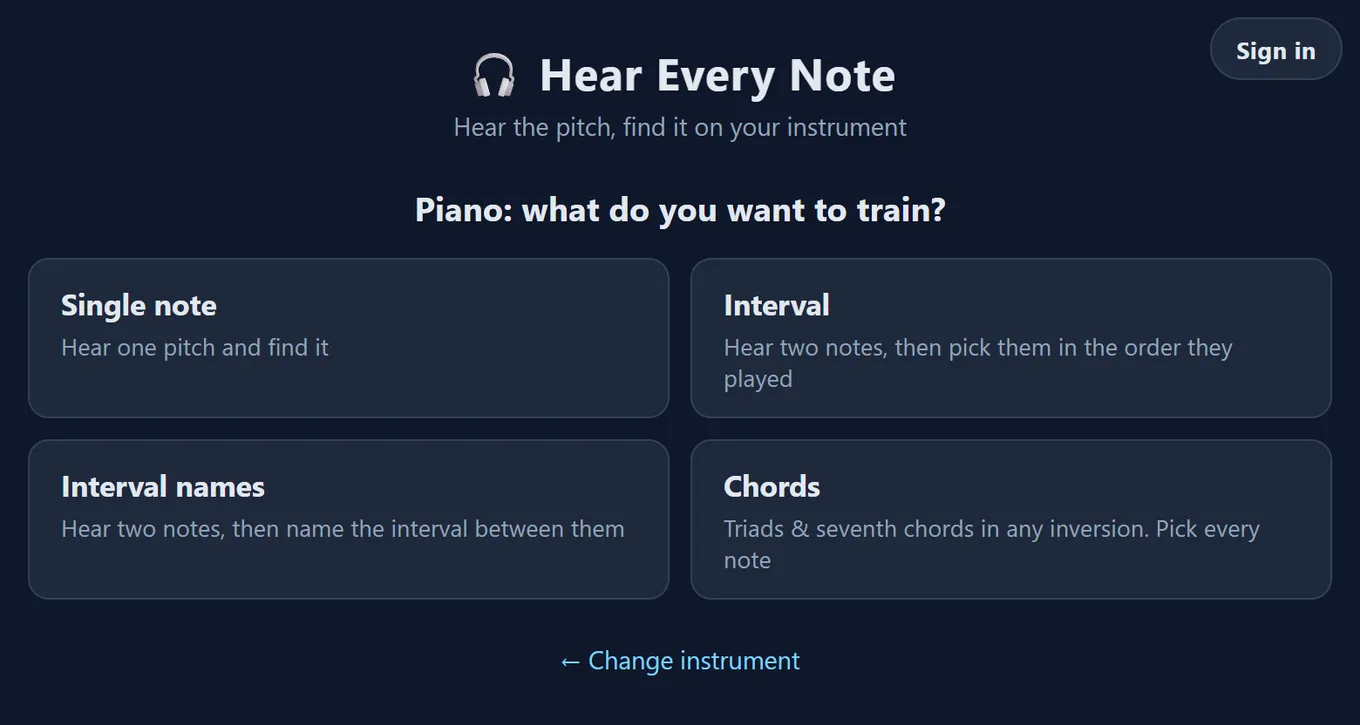
An interval is just the distance between two notes, and it's the alphabet of melody. Begin with four distinctive ones (minor 2nd, major 2nd, perfect 4th, perfect 5th), then add the rest in pairs. Anchor songs help a lot here ("Happy Birthday" starts with a major 2nd, Star Wars with a perfect 5th): they give you instant handles while your ear is still learning. Then drill with our interval trainer. Start in Interval names mode to learn the labels, then move to Interval mode, which asks you for both actual pitches. That's much closer to what transcribing really demands.
Step 3: chords (month 2 onward)
A chord is just intervals stacked on top of each other, so this is where the earlier work starts paying off. Learn to tell major and minor triads apart, then diminished and augmented, then seventh chords and inversions. In our chord trainer you identify every note in the chord from the bass up. Start with the arpeggio toggle on (notes played one at a time), and switch it off as soon as you're beating chance. Playing a wind or brass instrument? Use the dedicated Arpeggios mode: same chords, always played note by note.
The practice formula
- Ten minutes, every day. Pitch memory decays in hours, not weeks, so daily reinforcement is the single biggest predictor of progress. A daily challenge with a streak makes the habit nearly automatic.
- Always sing. If you can sing what you just heard, you've truly internalized it. If you can't, no answer you click counts for much.
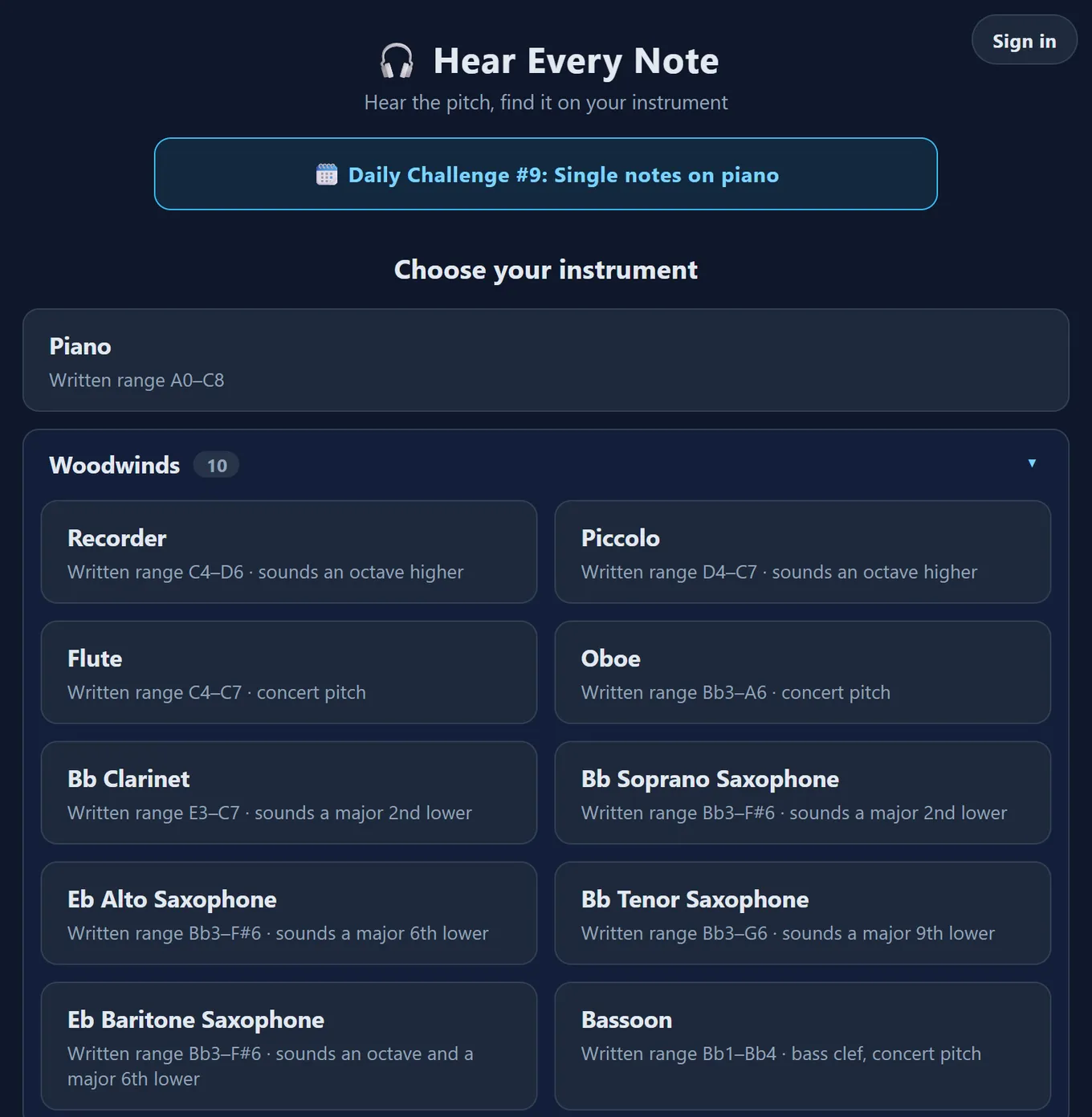
- Train on the sound of your own instrument. Recognition transfers fastest from the timbre you play every day, so pick real piano, guitar, violin, or saxophone sounds instead of beeps.
- Keep score. Accuracy you don't measure doesn't improve. Short scored games (five rounds here) show you exactly which intervals and chords still fool you.
Mistakes that stall beginners
- Marathon sessions. An hour on Sunday feels productive, but it does less than ten minutes a day. And fatigue teaches your ear to guess.
- Multiple-choice dependence. Picking "major 3rd" from four buttons is a lot easier than actually hearing the two pitches. If you can't name the actual notes, keep working the mode that makes you find them.
- Training only ascending intervals in only one register. Real melodies descend half the time and live in every octave. Train both directions, and move your practice range around.
- Chasing perfect pitch. Relative pitch is what working musicians actually rely on, and it's trainable at any age. Here's the difference explained.
Frequently asked questions
How long does ear training take to work?
Most beginners hear real progress on single notes and simple intervals within two to four weeks of short daily practice. Reliable interval and chord recognition across registers usually takes a few months. And the variable that matters most isn't session length, it's frequency.
How many minutes a day should I practice?
Ten focused minutes a day is plenty, and it beats an hour once a week every time. Pitch memory fades fast, so daily reinforcement is what makes recognition stick.
Should I learn intervals or chords first?
Intervals first. A chord is just a stack of intervals, so hearing the third and fifth inside a triad depends on interval skills. Before that, spend a little time on single-note recognition to build basic pitch memory.
Do I need to know music theory to start?
No. If you can read notes on a staff or find keys on a piano, you can start. Theory gives names to what you hear, but the hearing itself only comes from practice.
Keep going
When you're ready to go deeper, these guides pick up right where this one leaves off:
- What is an interval? Every interval explained, with a full reference table.
- How to recognize chords by ear: the triad-to-sevenths practice ladder.
- A 10-minute daily routine: exactly what to do each day, and how to level it up.
- How to transcribe music by ear: putting these skills to work on real songs.
- Play guitar or sing? See ear training for guitarists and ear training for singers.